





Thermal and heat resistance maps
Starting with the core heating, an equivalent heat resistance network is being established, which identifies each layer of material and the heat-replacement path.
For large battery energy storage systems, design from cell heat generation, cold-plate heat exchange, and rack hydraulic balance through CDU, chiller, and ambient heat-rejection boundaries—using closed-loop control of temperature, flow, pressure, and dew point so thermal management becomes a calculable, verifiable, and recoverable system capability.
Starting with the core heating, an equivalent heat resistance network is being established, which identifies each layer of material and the heat-replacement path.
Compare front and side view heat fields, check the hot zone, temperature differentials and vertical gradients.
Low thermal resistance design, controls the temperature rise between heat sources and cooling fluids.
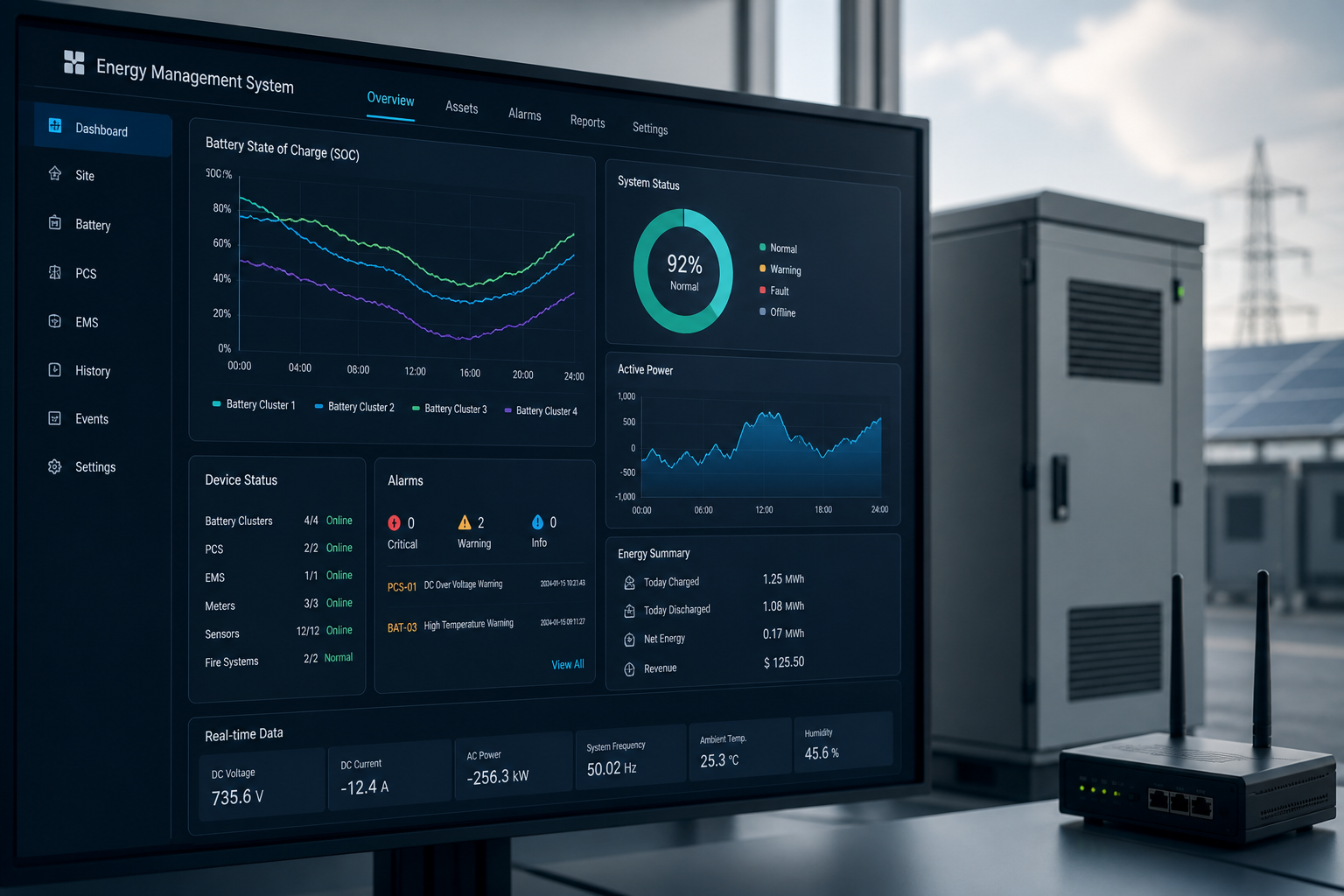
Sensor recognition traffic, pressure or temperature variability.
Anomalous circuits combined with secondary traffic, temperature and valves.
Adjust the speed of pumps, valve openings and cooling distribution.
Temperature and flow are restored to normal controlable areas.
Automatically generate event evidence, parameters and action logs.
CFFD+system imitation + stage validation, shortening the design iterative cycle.
Cover different capacity sizes and environmental conditions.