

Integrated lithium battery energy storage solutions
Battery Systems Technology.

CORE TECHNOLOGIES

Battery system technology

Battery cells, modules, racks, and system platforms for scalable storage delivery.

Cell-to-System Engineering Architecure lycée from core coherence to system architecture

Building a scalable, high-security, long-lived Energy Storage Systems based on consistency.

CELL Core Consistency
Core Consistency
  • Capacity Consistency
  • Consistency of voltage
  • Intrusive Consistency
  • Temperature consistency
MODULE / PACK Module / Battery Package Integration
Module / Battery Package Integration
  • Efficient integration and structural design
  • BMU Collection and Balanced Management
  • Money transfer and insulation protection
  • Thermal management and heat route
RACK / STRING Frame / Thread Power Capacity Structure
Frame / Thread Power Capacity Structure
  • Multi-packing and connected voltage Capacity Configuration
  • BCU Centralized Collection and Management
  • High pressure connection and insulation monitoring
  • Airframe heat management and protection
Core
CABINET Energy available in the storage cabinet
Energy available in the storage cabinet
  • BMS Conservation and Energy Management
  • Fire and aerosols / Water
  • Temperature and windways management
  • Maintenanceability and Optimization of Available Energy
BESS SYSTEM Multi-Camber System Extension
Multi-Camber System Extension
  • Multiple cabinets and acupuncture.
  • PCS Energy Transformation and Convergence Control
  • EMS Energy Movement and Optimization
  • AC distribution and protection coordination
SITE / GRID Site / grid interface
Site / grid interface
  • Pressure transformers and switches
  • PCC Net Access
  • Quality of electricity and protection
  • Dispatch and grid-compliant interconnection
Electrical Power
  1. Consistency of core parameters
  2. Motion flow and insulation
  3. High pressure connection and distribution
  4. Electrical protection and measurement at cabinet level
  5. Combining power with power.
  6. Net and power quality
Control Control
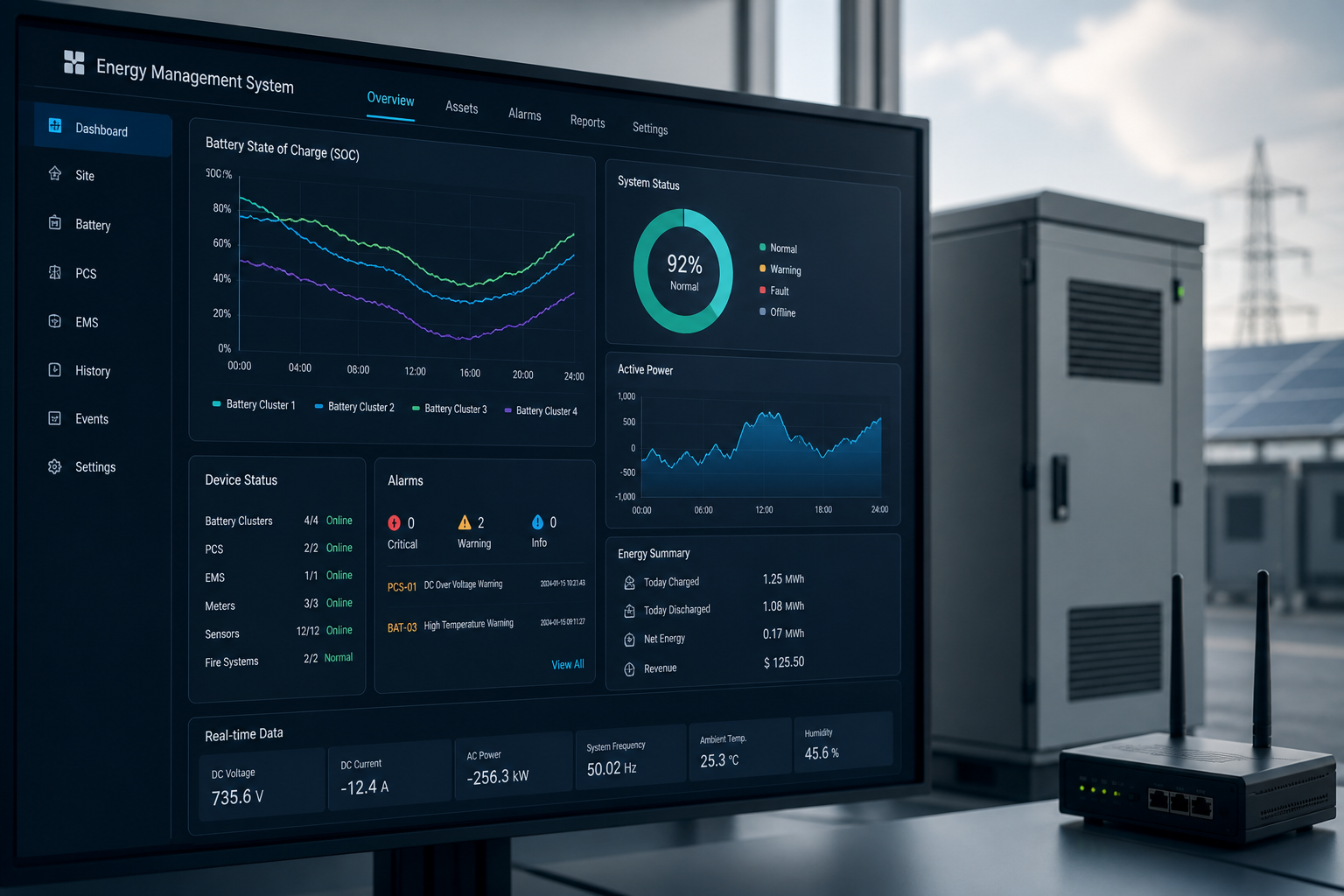
  1. Sample and Status Perceptions
  2. BMU Data Management
  3. BCU Monitoring and Control
  4. BMS Decision-Making and Protection
  5. EMS coordinated dispatch
  6. Network communications and protocols
Thermal management Thermal
  1. Electron core thermal consistency
  2. Model dissipation design
  3. Panel heat management
  4. The cabinet temperature and windways.
  5. System Thermal Balance Management
  6. Site-level environmental management
SAFETY Safety
  1. Material and process safety
  2. Structure and insulation security
  3. High pressure and protective safety
  4. Fire and blast protection design
  5. System-level security.
  6. Site security and compliance