

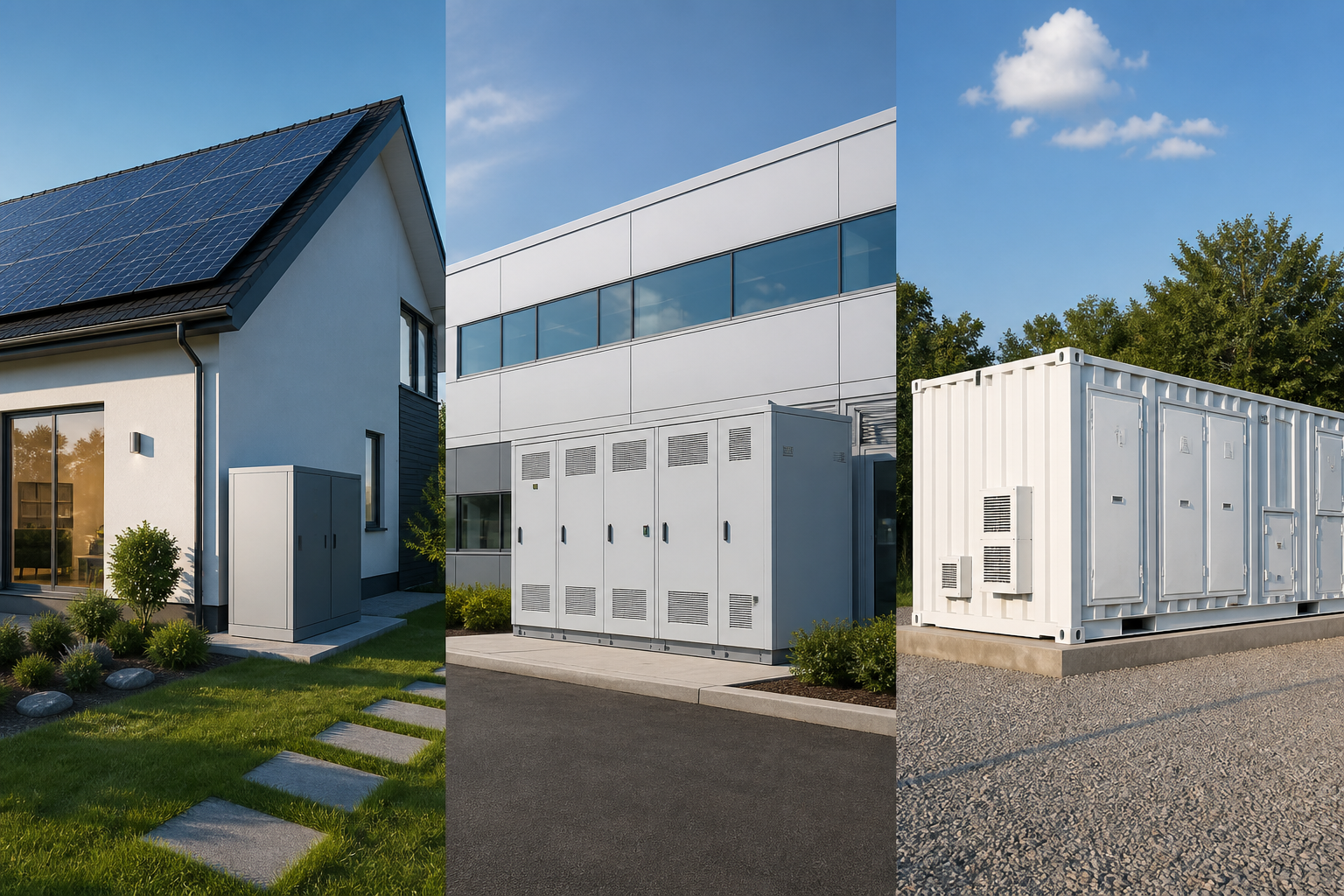
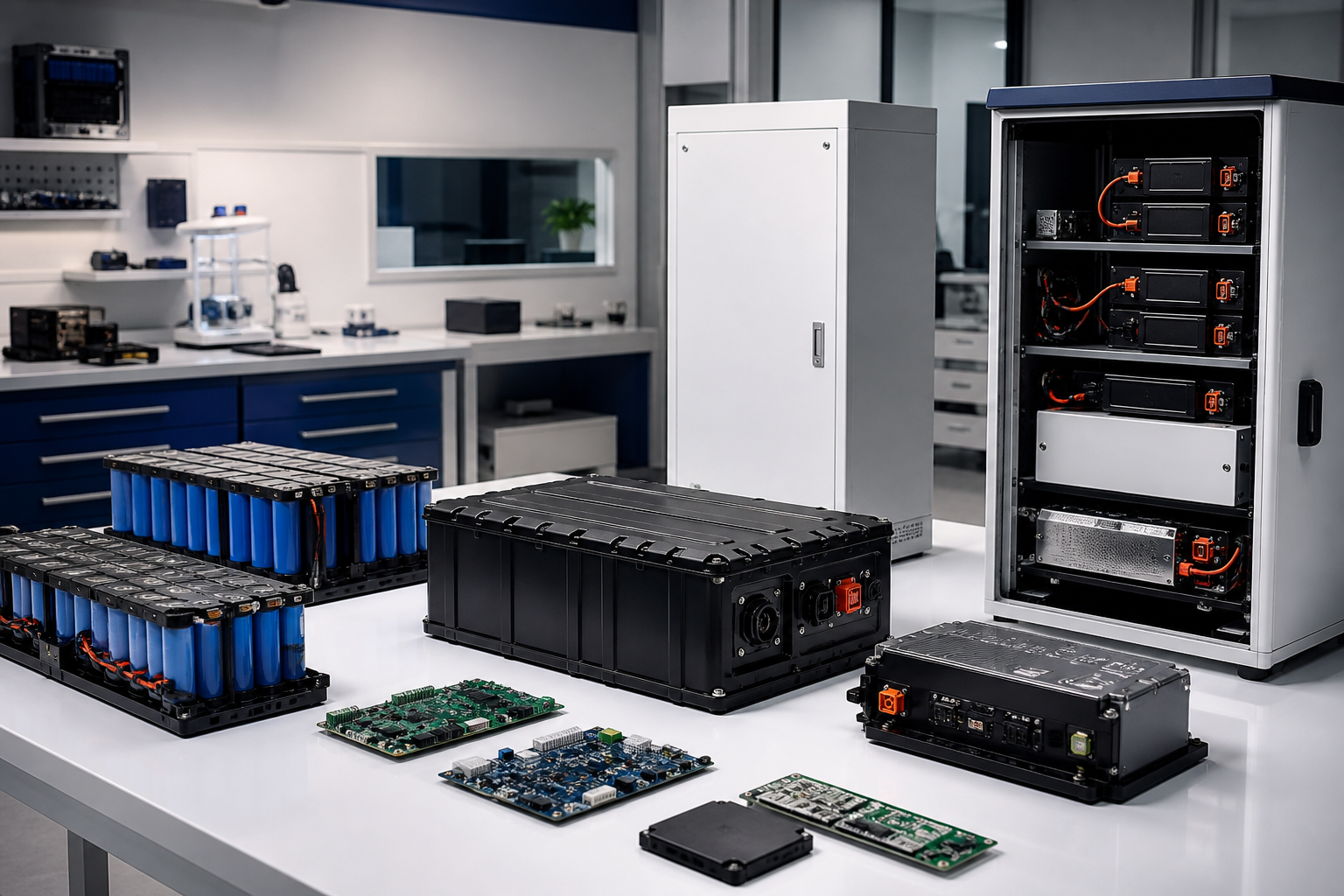


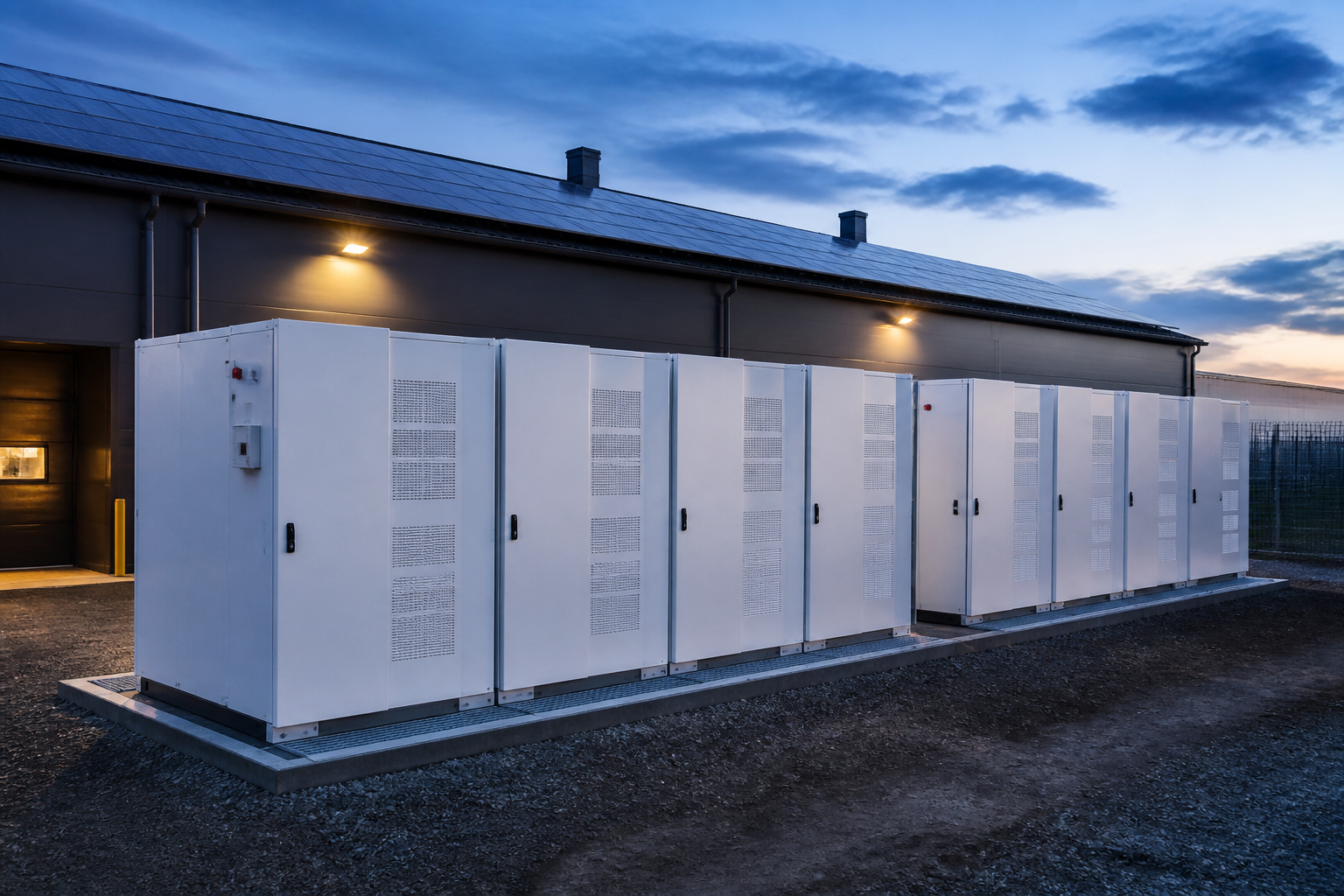
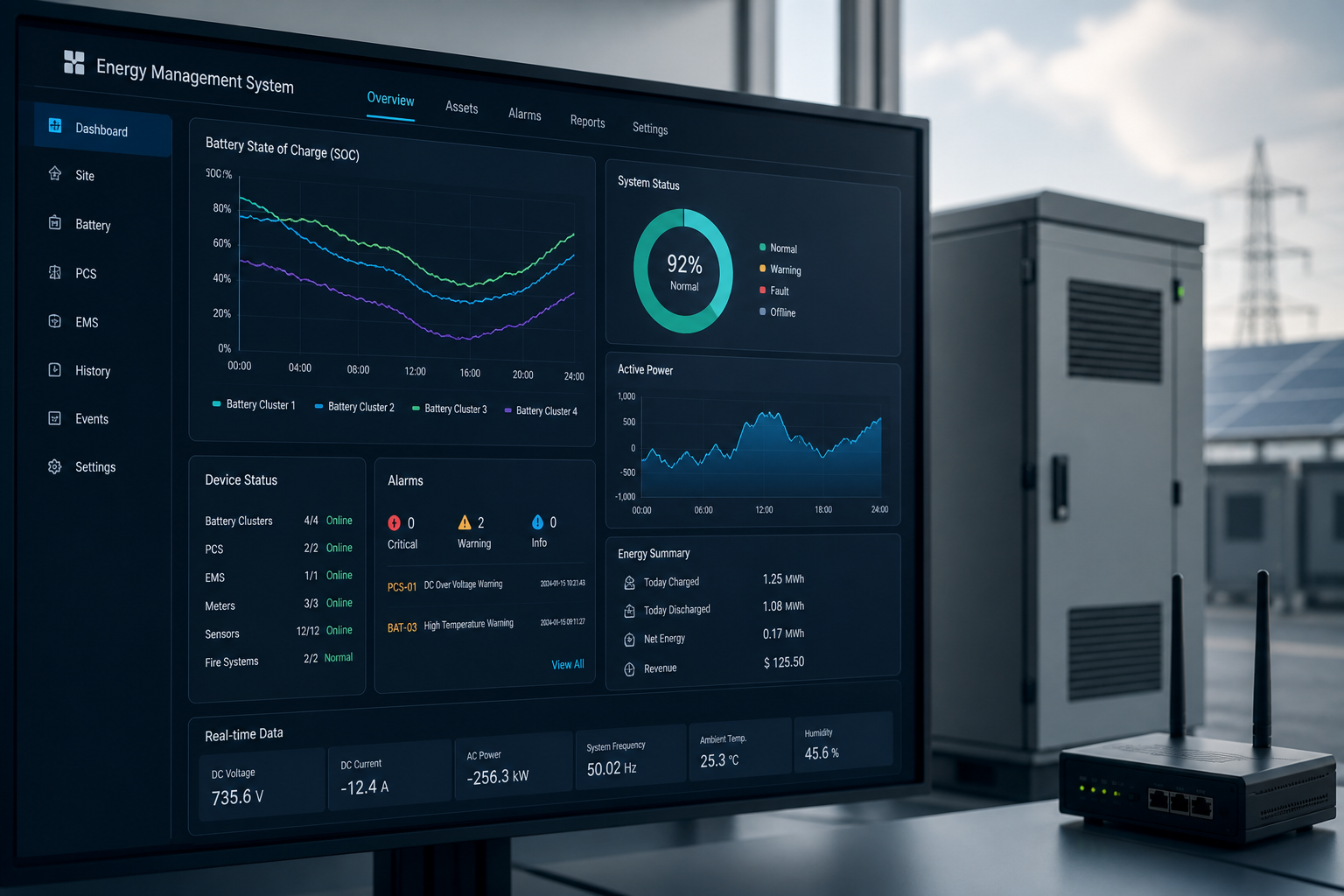

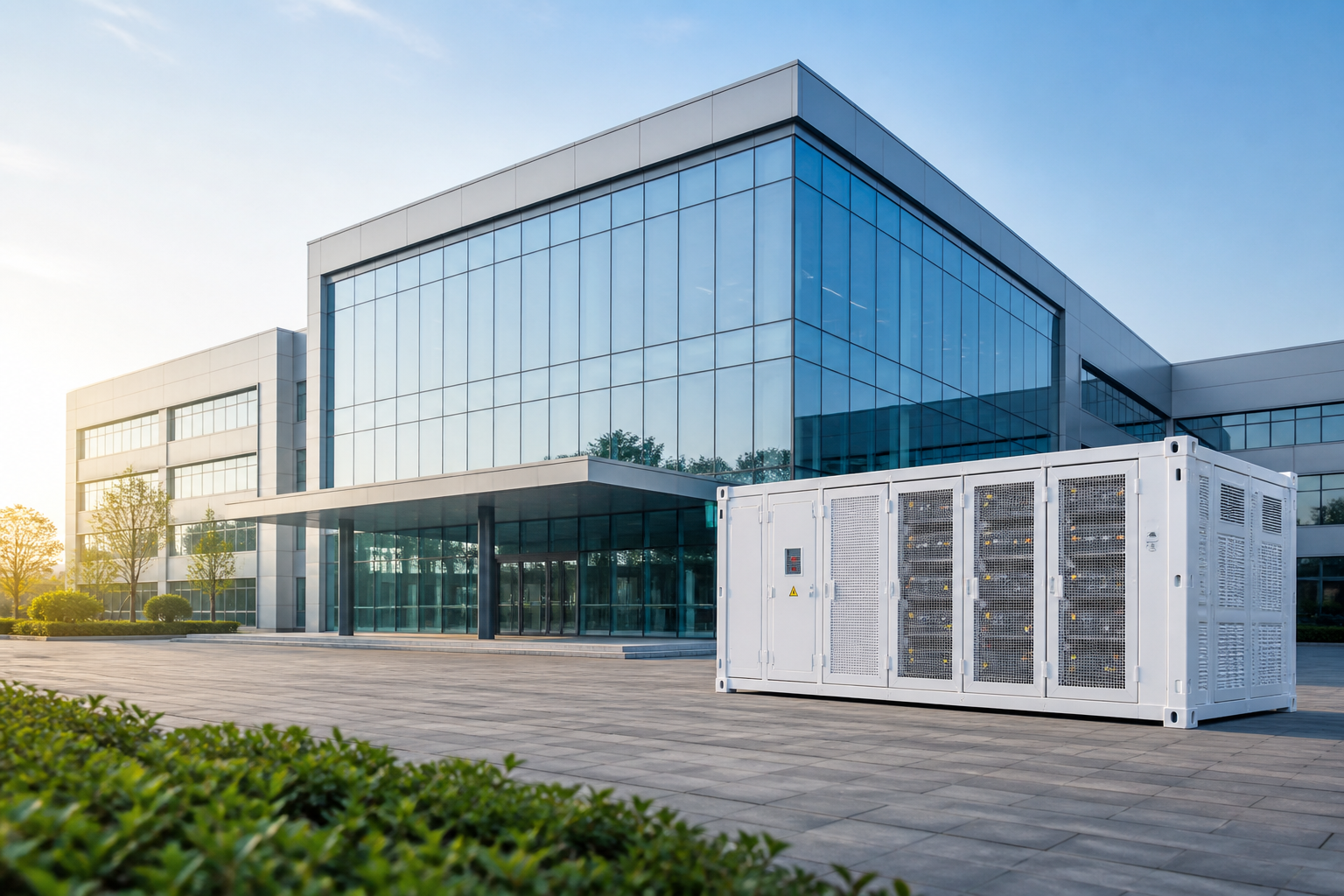
Integrated lithium battery energy storage solutions
ENERGY STORAGE FIRE SAFETY

From early signals to system isolation,
build multi-layer fire-safety defenses

For large storage plants, place early cell thermal-runaway sensing, multi-source cross-confirmation, BMS / PCS / EMS coordination, cabinet isolation, fire suppression, and station-level emergency response in one fire-safety system—and keep risk inside the smallest practicable boundary.

Yes.
Early detection Multi-parameter trend perception
Interval
Fast isolation Cascade protection
Chile
Smart fire. Multi-system coordination
Multi-parameter sensing
Gas detection
Sound alarm.
Fire extinguisher
PCS/ EMS Link
< 30 s Early signal recognition.
Multi-layer isolation Cylinders, modulations, modulations, cabinets, station level
≥ 99.9% Link action availability
≤ 5 min All station emergency disposal links

Fire propagation chain and multi-layer isolation design

cell

Thermal runaway source
Key risks
Internal short circuit / lithium / local temperature
Cell-level monitoring
BMS temperature / voltage warning

Module

The heat spreads.
Key risks
Thermal transmission of adjoining electrocrystals within the module
Model Group Insulation
Flammability and heat diffusion inhibition

Cluster/ rack

Spread Zoom
Key risks
Inner heat accumulation / flue gas diffusion
Cluster isolation
Pressure release / local fire suppression

Battery cupboard

It's spreading inside.
Key risks
High temperature inside cabinet / flue gas
Counter fire.
Gas extinguisher / Depressure / Segregation

Power station

Cross / Site Proliferation
Key risks
Surrounded cabinets spreading / external fires
Station-level partition
Fire partition / spacing / protection

Sources of risk and early signal trends

Multi-source sensing cross-check

Multiparameter confirmation

Temp
Temperature NTC / Thermal utility doll
Smoke
Smoke detection Photoelectric / Ion
Gas
Gases CO / H₂ / CO₂ / VOC
Press.
Pressure Container / Depression
Electricity
Electrical features voltage / current /dI/dt
&Normal
Attention
Alarm
segregated
Emergency response

Alarm-state evolution and interlocking strategy

&Normal
Status Definition

The system is working and the various parameters are in the safe zone.

System Actions

Continued monitoring without additional intervention.

Attention
Status Definition

Early unusual trends have occurred, but the warning threshold has not yet been reached.

System Actions

Increase the frequency of sampling and enhance trend judgement.

Alarm
Status Definition

Multiple-source signals meet warning or warning thresholds.

System Actions

Stop charging and start fire-fighting.

segregated
Status Definition

Risks have increased, requiring physical isolation.

System Actions

Cuts high pressure, isolates the malfunctioning cabinet and initiates fire suppression.

Emergency response
Status Definition

Start site-level emergency preparedness and personnel security process.

System Actions

Personnel evacuation, open fire interfaces, emergency response.

BMS
PCS
EMS
Fire controller
Ventilation system
Light / Sound
Security system

Multi-layer engineering line Inside and outside.

Electrical isolation and CPS association High pressure cut, contact locks, power drops fast.
Fire suppression and containment inside the cabinet Various configurations such as gas fire suppression, aerosols, water fog etc.
Ventilation and gas management Forced ventilation, flammable gas detection and blastproof design.
Excretion and structural protection Depressure channels, structural strengthening, heat shock control.
Multi-box anti-spread design. Fire partitions, isolation distance and station-level fire escape routes.

Station-level emergency response and security border

Hot zone: restricted access
Warm zone: alert control
Cold zone: secure assembly
Polisi Automatic alarm. Sound Light + SMS + Platform
People Withdrawal of personnel Secure assembly point.
Fire Fire fighting. External rescue interface

A complete event link. Example Timeline

12:12:04 Early sensing Wave The temperature rises abnormally with the CO signal.
12:12:15 Multisource confirmation Judgement Temperature, smoke, gas cross-checking
12:12:25 Stop Charging Stop. PCS Decline and Stop Power Output
12:12:31 Block Actions Interval Cut off the high-pressure circuit and isolate the malfunctioning cabinet.
12:12:55 Depress / Fire Extermination Fire system complete containment and suppression.
12:13:20 Notification and association Cloud Platform, people and station level
12:15:00 Evidence and analysis Evidence Auto-generated incident evidence and analysis reports

Anomalous and degraded scene design

Simulation and reality validation

Simulation verification Digital twin / CFC

  • Thermal-runaway propagation simulation
  • Smoke and flow field analysis
  • Fire extinguisher concentration and temperature assessment

Full-scale fire test.

  • Model Group Level / Cluster / Cabinet Test
  • Fire suppression capability verified
  • Hot-transmission boundary confirmation.

System connection test

  • Link Sequence Validation
  • Power-off / isolation / alarm chain
  • Long-term stability test

Safe delivery

HA HAZOP and risk assessment report Risk identification, ranking and control measures
Fire Fire protection design and calculation book Detection, fire suppression, excretion and associated design
Link Linking logic and time series BMS / PCS / EMS / Fire Chain
Measure Test validation report CFC / Fire / Associated Test Record
Case Protection manual and contingency plan Daily inspections, exercises and accident disposal