

Preventive Maintenance
(Preventive Maintenance) | Preventive Maintenance
Based on the criticality and real state of operation of the equipment,
Set up maintenance before the failure.
Risk-driven maintenance system for large energy storage systems
99.2%
Availability Performance (DEMO)
35%
Percentage of planned maintenance (DEMO)
28%
Maintenance efficiency optimization (DEMO)
Preeventive Maintenance
Around the key.
Evidence-based maintenance
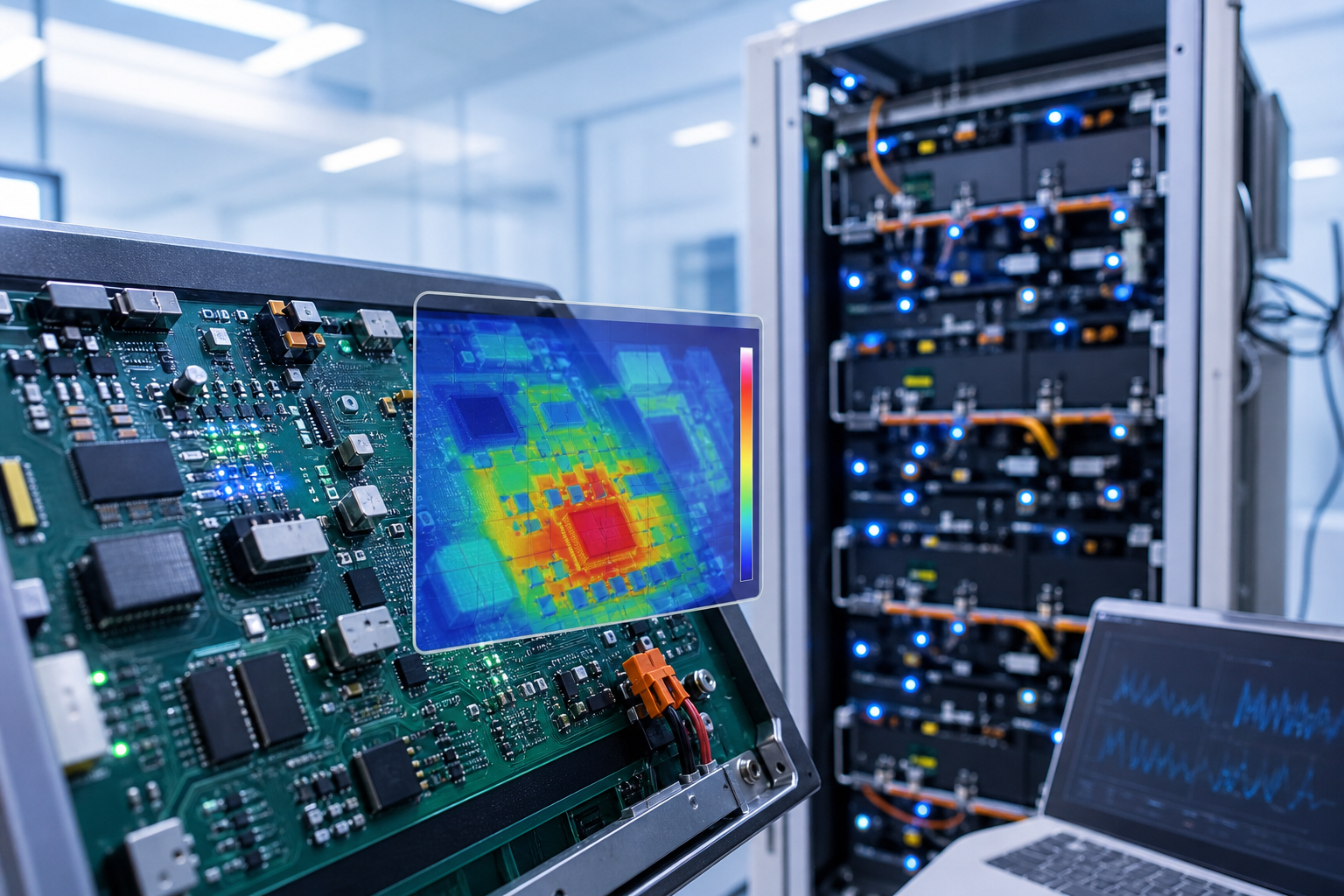
Instead of using the calendar as a " plan " , it is based on criticality, running loads and real measurements, focusing on areas that affect safety, usability and longevity.
DC connection and busbar
- Connection Tight
- Exposure resistance
- Warm rise
Example of measurement35 μΩ
Warm rise18.6°C
Warm rise18.6°C
Cooling system
- Liquid-cooling pump / fan operation
- Pressure / flow
- Temperature differential / cooling performance
Temperature of cooling fluid25.1°C
Pressure variance48 kPa
Pressure variance48 kPa
Filter and Ventilation
- Filter core pressure differential
- Filter Status
Scan core resistance.62 Pa
StatusMedium
StatusMedium
Insulation and electrical security
- Insulation.
- Media intensity
Insulation.512 MΩ
Extent of change2.4%
Extent of change2.4%
FIRE FIGHTING SYSTEM
- Detection / Alert
- Gas suppression.
- Connected power
Risk response1.55 MΩ
Prefix completed90%
Prefix completed90%
Control and communication
- BMS / EMS Status
- Quality of communication links
- Time Sync
Drop Rate0.02%
Time deviation12 ms
Time deviation12 ms
Boxes and environment
- Protect / Seal
- Temperature
- Structure and state
Inner humidity32%RH
Ingress protectionIP54
Ingress protectionIP54
Maintenance how to proceed (example)
1
Asset baseline
Establishment of a baseline for equipment structure and configuration, solidification of asset identification and key parameters.
2
Risk / Use to plan
The maintenance cycle is determined dynamically based on criticality, frequency of operation and use of the scene.
3
Preparation for work
Preparation personnel, tools, spare parts, programmes and operating permits.
4
Check / Service
Conduct inspections, cleaning, securing and planning maintenance.
5
Measurement / Validation
Use data to confirm status and create comparable maintenance results.
6
Disposal of deficiencies
Sorting, close-ring tracking, priority disposal based on risk.
7
Receiving and Inspection / Restore
Validation of restoration conditions and completion of system repositioning to confirm continued operation.
8
Rewinding and Optimizing Trends
Integrate maintenance results into trend models and continuously revise follow-up maintenance plans.
Data driven decision-making
Managing the future with trends
Out of cyclical management from single maintenance, equipment status, trends and risks will be the basis for the next maintenance plan.
Health Rating (DEMO)92 / 100
Check Item (DEMO)1,266 times
Availability (example)99.2%
Energy swallowing (example)18,760 MWh
Trends in temperature increase in key areas (DEMO)
Insulation resistance trends (DEMO)
Trends in cooling system pressure (DEMO)
Deficiencies distribution (nearly 90 days DEMO)
Total24 items
P1 Serious 3 (12%)P2 General 7 (29 per cent)P3 Minor 14 (59%)
Trends in health ratings (DEMO)
Make maintenance more evidence, make it more secure.
With the Preventive Community system, the Corporation helps large-scale energy storage systems to be safer, more stable and more cost-effective.